
Summary
Migration for 30,000+ Product Experts
Led E2E design for migrating 30,000+ experts off Salesforce and onto Intuit's own native platform — and built the capability framework that shaped how the org planned the roadmap.
My impact
-
17.5 min
average handle time, down 5%
Faster resolution, worth millions in savings
-
+1.1
tNPS improvement
Higher expert satisfaction
-
82%
tools readiness, up 8% over Salesforce
More reliable than the system it replaced
What I delivered
-
Capability framework
Created the evaluation system the org used for roadmap planning and resource allocation. Every capability classified, every gap visible before design started.
-
Service and experience blueprints
Co-created the E2E blueprints mapping every expert workflow, surfacing dependencies and design gaps before a single screen was built.
-

Platform mindset
Every capability was built to be durable and scalable across archetypes, not just the first migration. This thinking became the standard for how IEP grows.
-

Organizational alignment
Brought design, engineering, and product into a shared understanding of what 'ready' meant before migration started — Tools Readiness as a design artifact, not just a metric.
Migration for 30,000+ Product Experts
Goal
Migrate over 30,000 TurboTax product support experts from Salesforce to Intuit Expert Portal (IEP) to create a unified, scalable platform. The objective was to eliminate dependency on Salesforce while improving workflows, expert productivity, and platform reliability — ultimately enhancing customer support experiences during the peak tax season.
My Impact
I led E2E product, service, and experience design, collaborating with cross-functional partners across engineering, legal, security, and operations. I created scalable design frameworks, built service blueprints, and developed a capability evaluation system that shaped both our design process and roadmap planning. My work guided the platform's evolution and directly influenced the success of the expert migration.
What I delivered
- 100% of tiered product experts transitioned from Salesforce to IEP
- 4M customer contacts handled — up 42% year over year
- 95% contact handle rate and 5% improvement in Average Handle Time (now 17.5 min)
- tNPS rose to 54.5 (+1.1 points)
- Tools Readiness Score: 82%
- Experts praised the platform as more efficient, reliable, and easier to use
What is a product support expert?
Someone hired by Intuit to provide virtual assistance and advice to customers on product support issues, such as login problems or technical glitches. These product experts play a crucial role in ensuring that customers have a positive and efficient tax preparation experience.

User Research
Before diving into the design process, I led user research sessions called Follow Me Homes to gain empathy and a deep understanding of the product and identify its pain points. Our goal wasn't just to replicate the existing capabilities from Salesforce in the new platform — we wanted to enhance them as we transitioned.
As part of the discovery work, I helped co-create service and experience design blueprints, mapping out the E2E workflow of a product expert, including their tasks and actions, to fully understand what it means to have a successful issue resolution.
Experience Design Blueprint
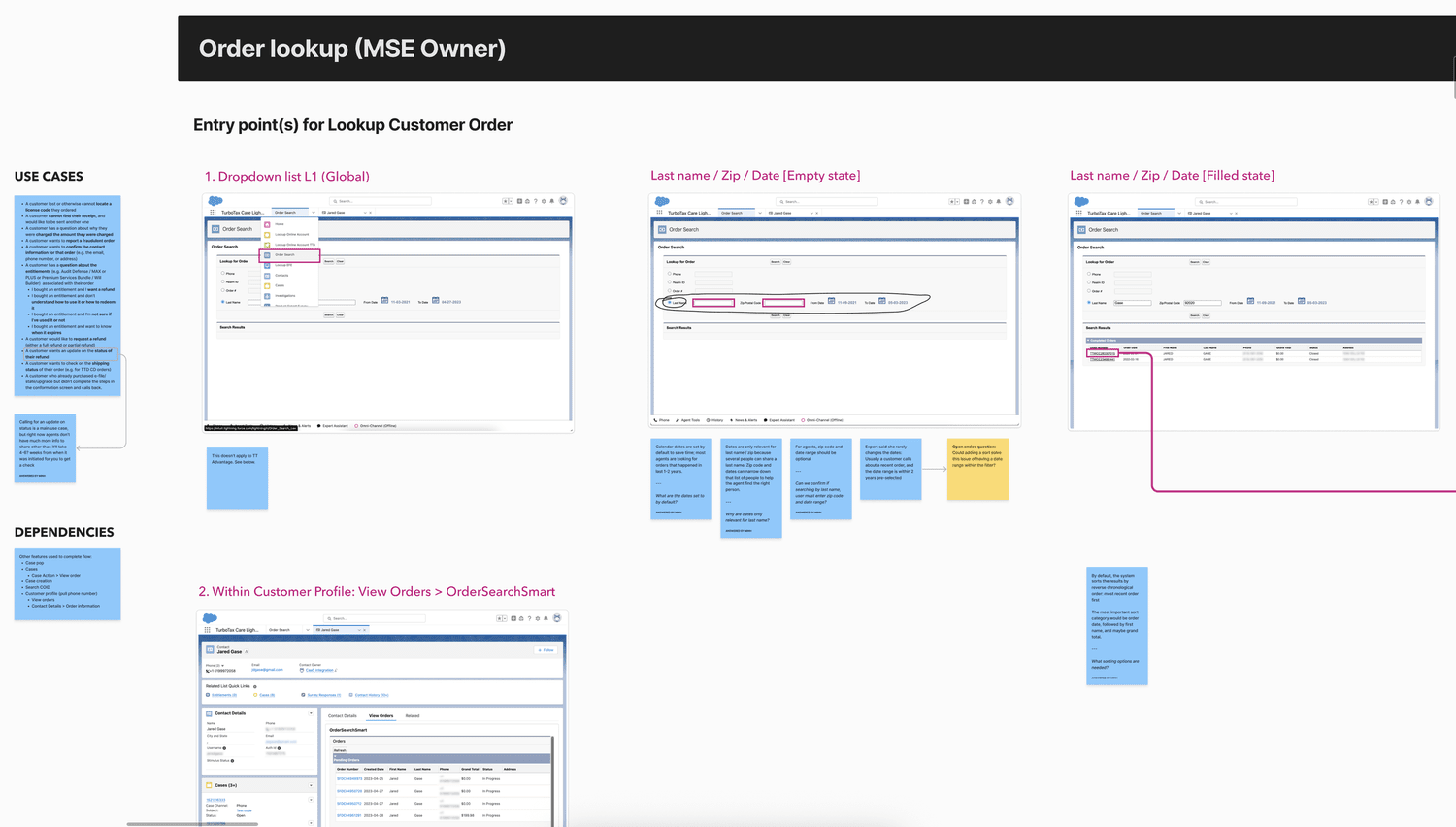
We mapped each user flow and use case, ensuring a comprehensive understanding of the customer journey. We used sticky notes to annotate areas where we had questions, comments, and concerns regarding the current flow — focusing on UI patterns, workflows, and processes, helping us identify potential improvements and areas for optimization.
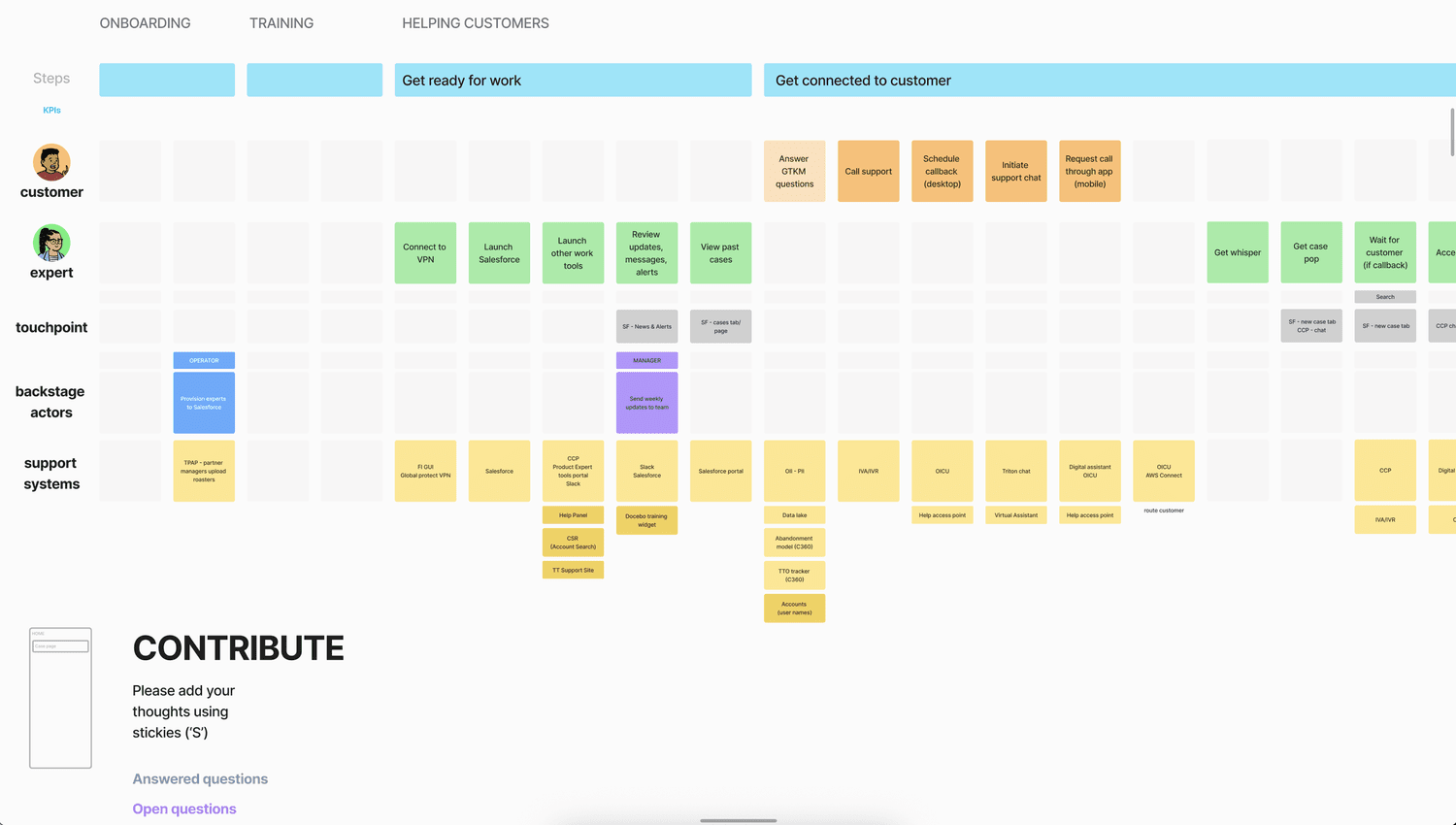
Service Design Blueprint
Service design blueprints are a tangible way to visualize the components of the current service, showing the orchestration of people, touchpoints, processes, and technology. They map the experience of both those in direct contact with the customer and the users working behind the scenes to deliver the service, highlighting dependencies within the organization and aiding in the creation of plans and roadmaps.
Problem statement
I am... a TurboTax product support expert
I am trying to… handle customer issues as quickly and efficiently as possible
But… the tools and features in Salesforce, along with the existing workflows and processes, are not effective for resolving these issues quickly
Because… the tools are unreliable, the data is often outdated or unavailable, and the workflows were built by individuals who didn't fully understand the business needs
Which makes me feel... frustrated and helpless, knowing that I am not able to provide the best possible support to my customers.
Business goal
Establish Intuit Expert Portal (IEP) as the sole platform for all product experts, delivering and enhancing capabilities for product experts to fully serve their customers without needing access to Salesforce, and effectively transitioning in-product reports, insights, and data from Salesforce to IEP.
Success is measured by: 100% of tiered TurboTax product experts in IEP with no usage of Salesforce.
Requirements
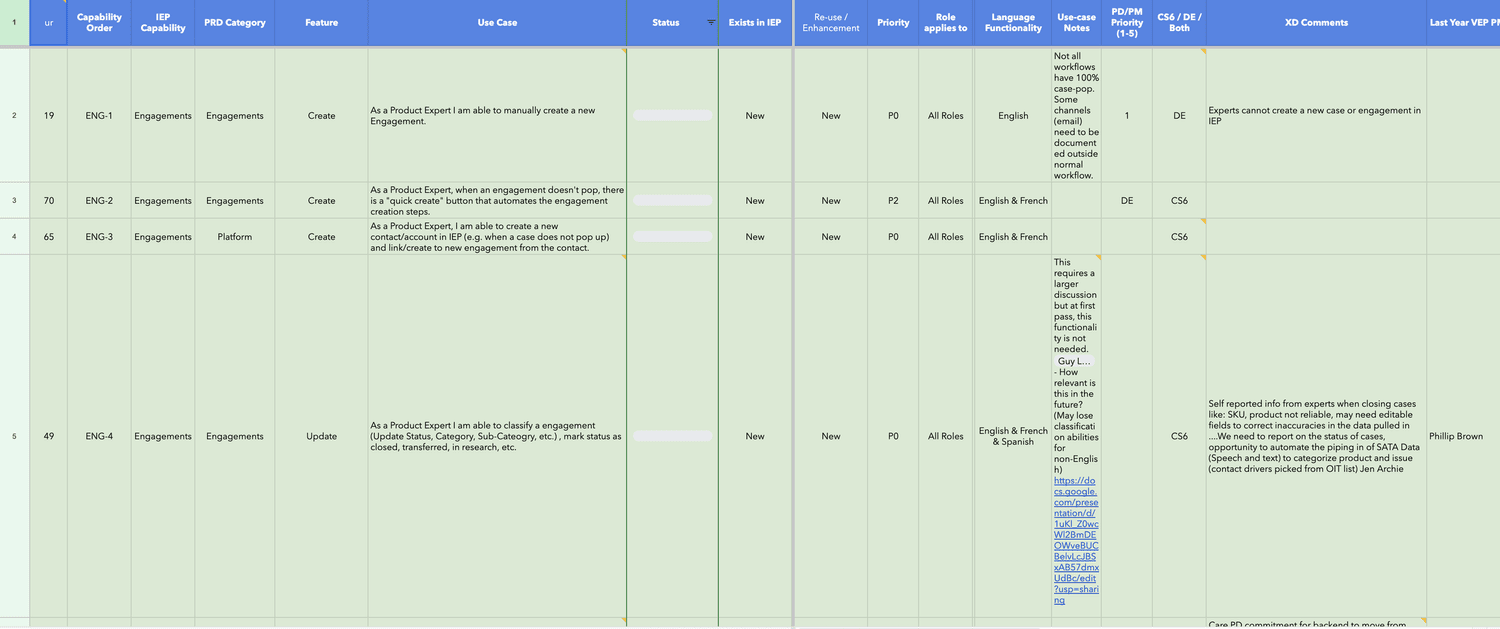
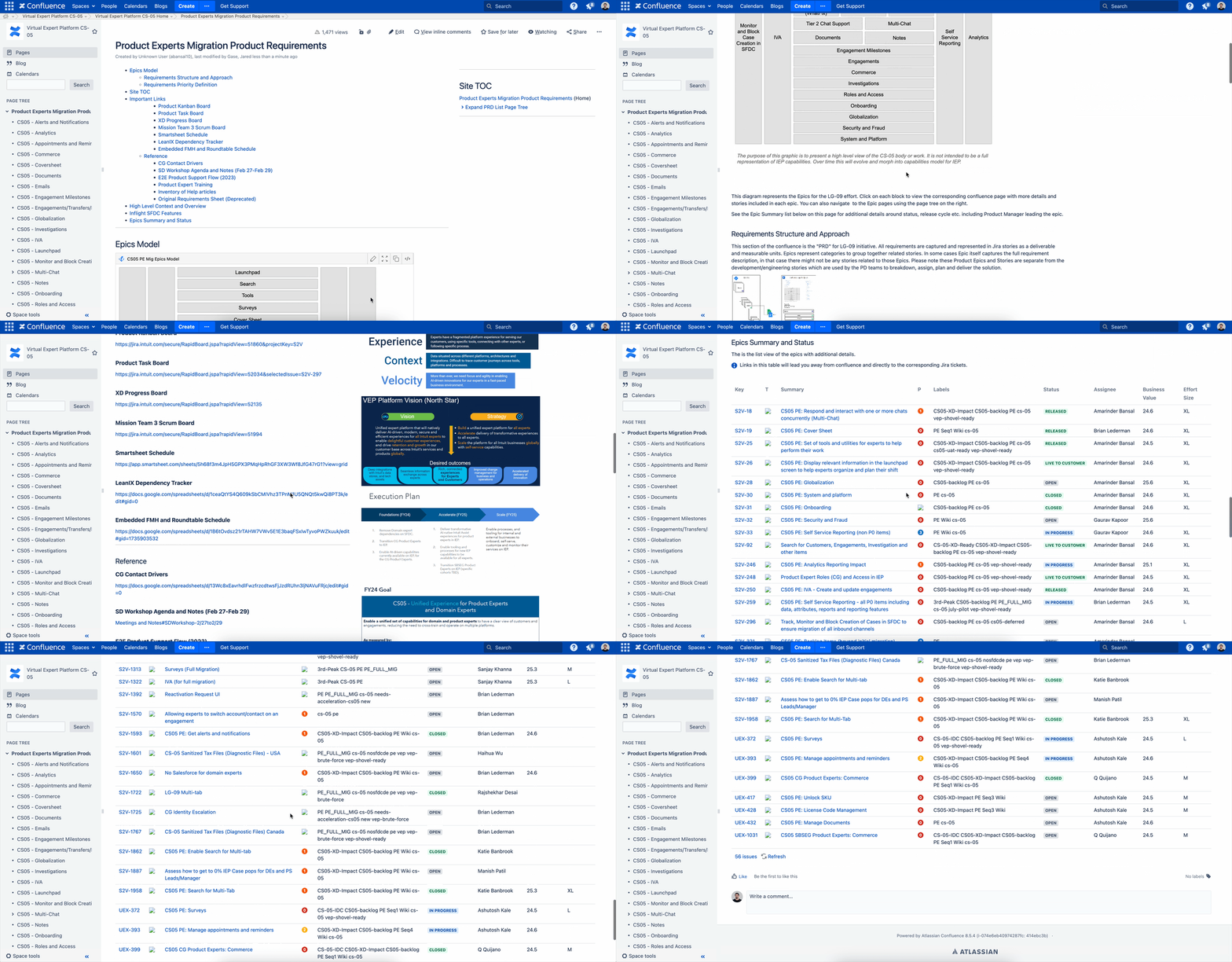
Business System Analysis (BSA) collaborates closely with TurboTax to understand and document their needs, creating Business Requirement Documents (BRDs) that serve as a foundation for product experts to perform their tasks effectively. PMs in collaboration with Design then use these BRDs as a baseline to create Product Requirement Documents (PRDs) — making them more robust and comprehensive, accounting for the target state with a platform mindset.
Product support capabilities
Unlike typical projects where one person focuses on a single capability, this initiative demands close coordination across the entire organization to deliver cohesive, E2E results. To meet this challenge, I developed a framework that standardized and guided cross-team collaboration, which proved essential in driving the product design smoothly from conception to launch. As part of this approach, before diving into any specific capability, I first assessed whether it was already present and mature within Intuit Expert Portal (IEP) or if it needed to be newly built—ensuring alignment with the broader system and reducing redundancy.
No Enhancement Needed:
The capability is already mature and durable enough to handle all Salesforce use cases. It requires no further enhancements for product experts to utilize it effectively.
Enhancement Required:
The capability exists in the platform but is not yet durable enough to meet the needs of product experts. Enhancing this capability will make it more durable and reliable, ensuring it can handle the required use cases.
Net New:
The capability does not currently exist in the platform and will need to be built from scratch. Not only will it be essential for the product experts, but it must also be designed to be durable and scalable, allowing other experts within the platform to use it effectively as well.
E2E Capability Layout
After breaking down the different status it was time to layout all the capabilities into some type of grid. This is where I created a comprehensive E2E artifact for TurboTax product experts, encapsulating the lifecycle of a call using the IDEAL (Identify, Define, Explore, Act, Lookback) framework. This framework breaks down the various capabilities and tags the design owner of each. This will help internal team members access and review the designs pertinent to the migration. Additionally, it serves as a valuable resource for other designers and cross-functional partners to understand the full spectrum of capabilities used by product experts, and provides a direct line for inquiries or further discussions.
This artifact has also influenced leadership, aiding in roadmap planning, and identifying risks by highlighting design gaps, but also suggesting resource allocation of designers, where each designer could be placed based on similar, like-minded, capabilities.
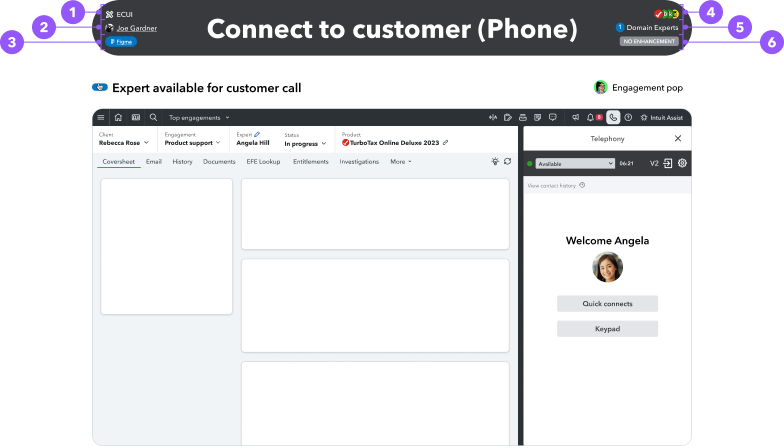
- Parent Capability — Capability ladders up to a [Parent capability name]
- Designer Name — The owner of this capability is [Designer Name].
- Figma link — Figma link to that specific capability: [Insert Link].
- Business Unit — Capability is specific to a business or is product agnostic.
- Phase — Capability was implemented in [Phase of the Project].
- Status — Capability needs to be built: [No enhancement, Enhanced, or Net new].
Capability Creation
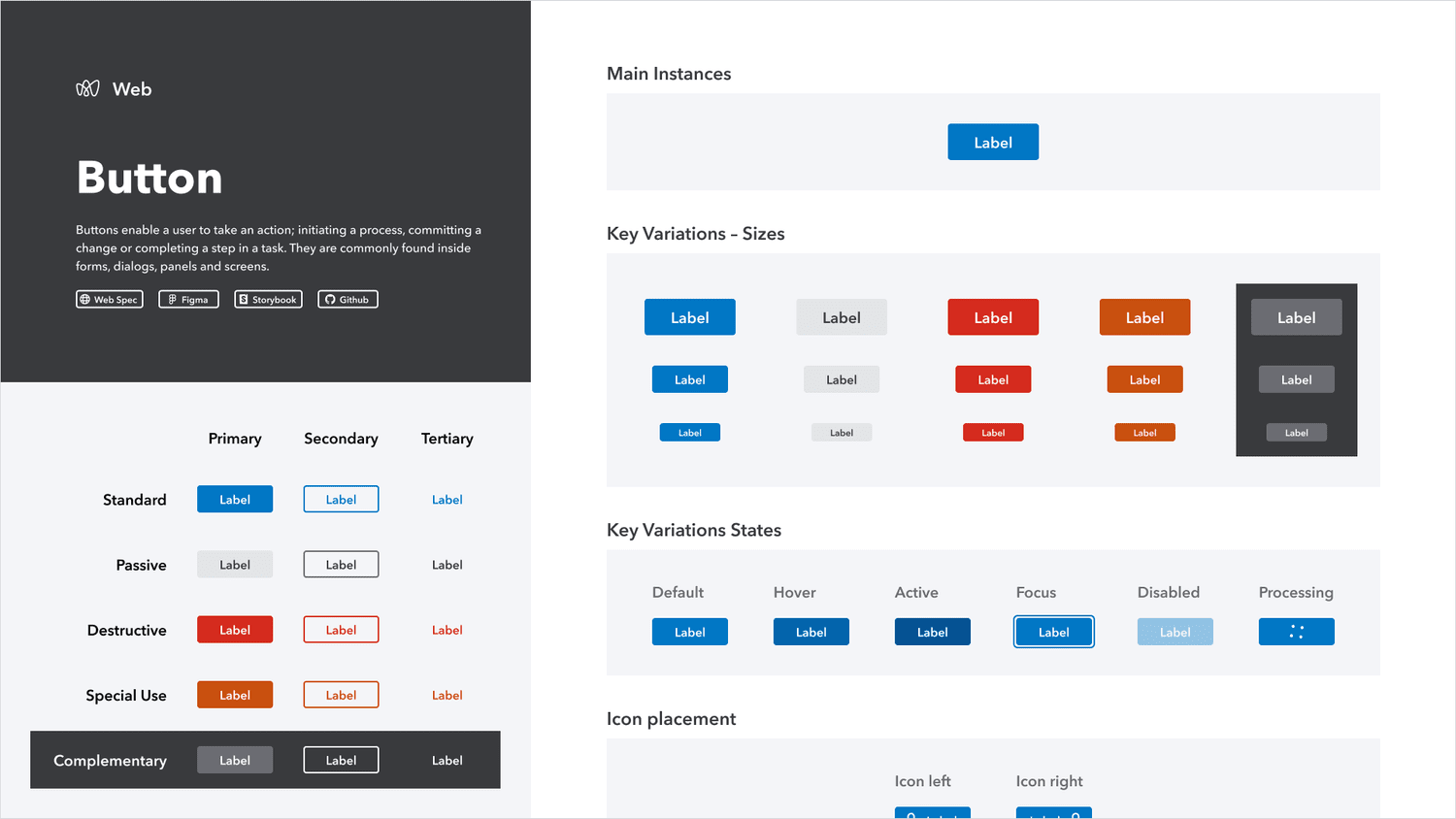
For the actual work of each capability, I took the lead on the design while closely collaborating with the capability owner, if one was assigned. My focus was on ensuring that the product experts' use cases were fully addressed, without compromising the overall design. I worked within the existing system to enhance the capability's durability, maintaining the core functions and features to avoid disrupting current users who might struggle with a completely new interface. This involved adhering to the established design system components and ensuring that all changes fit seamlessly into the existing workflow.
Roundtable sessions
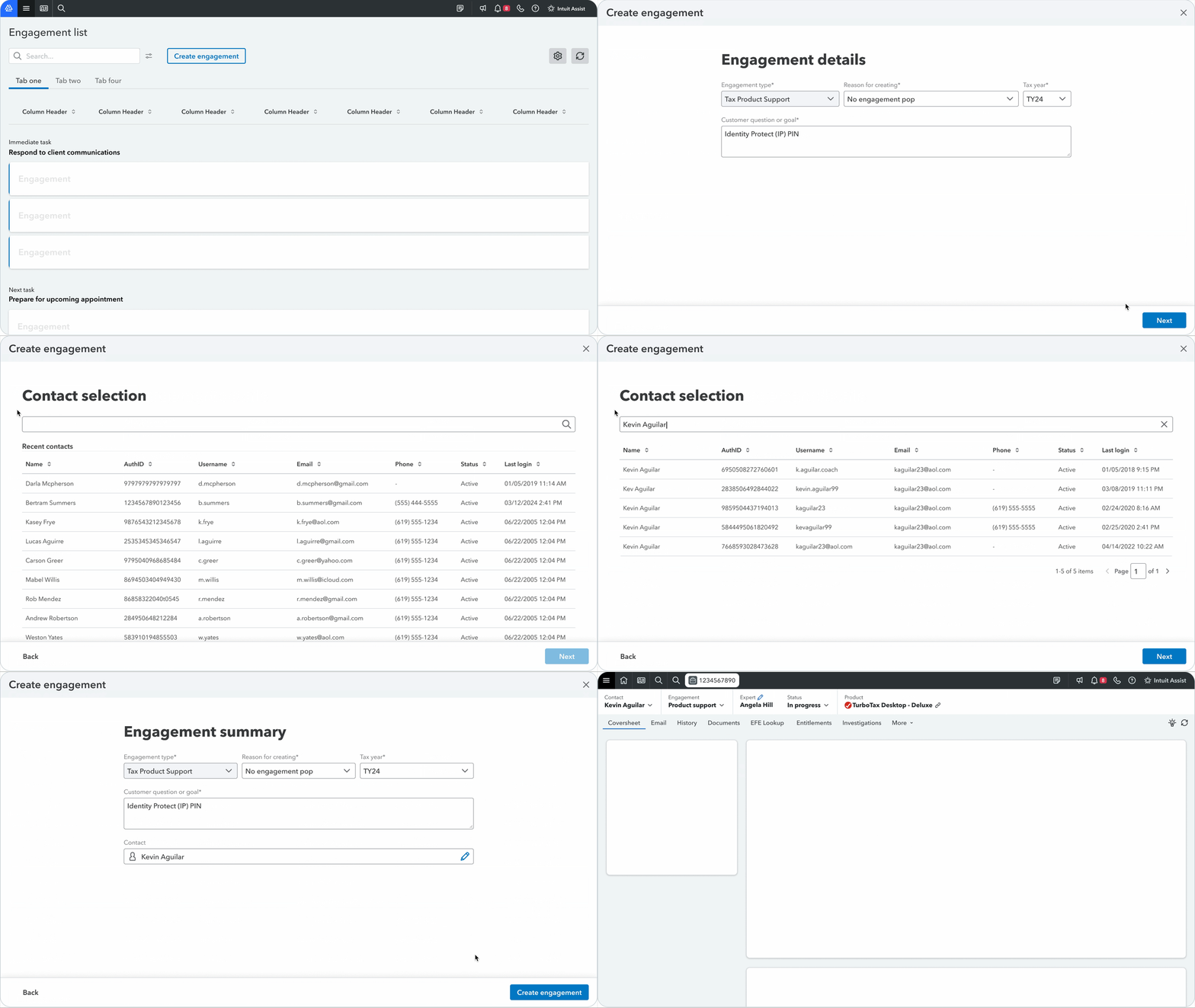
After the designs have been reviewed for initial sign-off, we ensure they meet our experts' standards. We typically conduct several rounds of roundtable sessions where the experts walk through the designs and provide feedback in any form. We then synthesize the feedback from all sessions to identify any common themes that need addressing.
Implementation
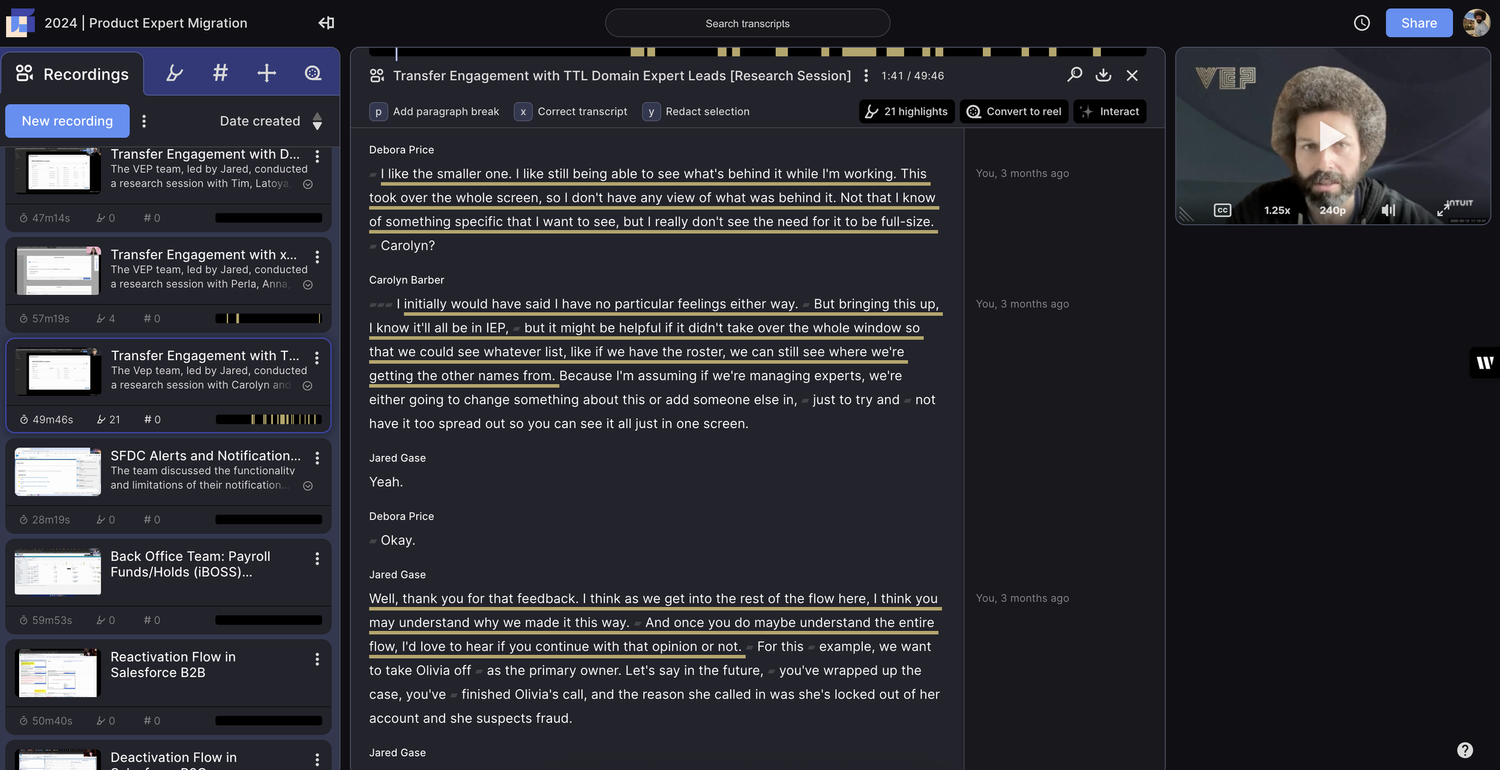
We will ensure that all development specifications, including edge cases, error states, and interactions, are thoroughly prepared. We'll use durable components from our design system to avoid custom code or one-off solutions.
While the designs are being coded, the development team will provide updates during our daily scrum meetings. They will share their builds with me to ensure pixel-perfect accuracy. After that, they will provide a pre-production link so I can test the build, trying to break it through various scenarios and edge cases. I will then document any discrepancy and share it with them.
Once we have internal sign-off, the build will move to User Acceptance Testing (UAT). I will help create scenarios for real experts to test the build in both typical and complex situations, ensuring a pass/fail at every step. Any failures will be documented and addressed. Once it passes UAT, the build will go to production.
Product launch summary
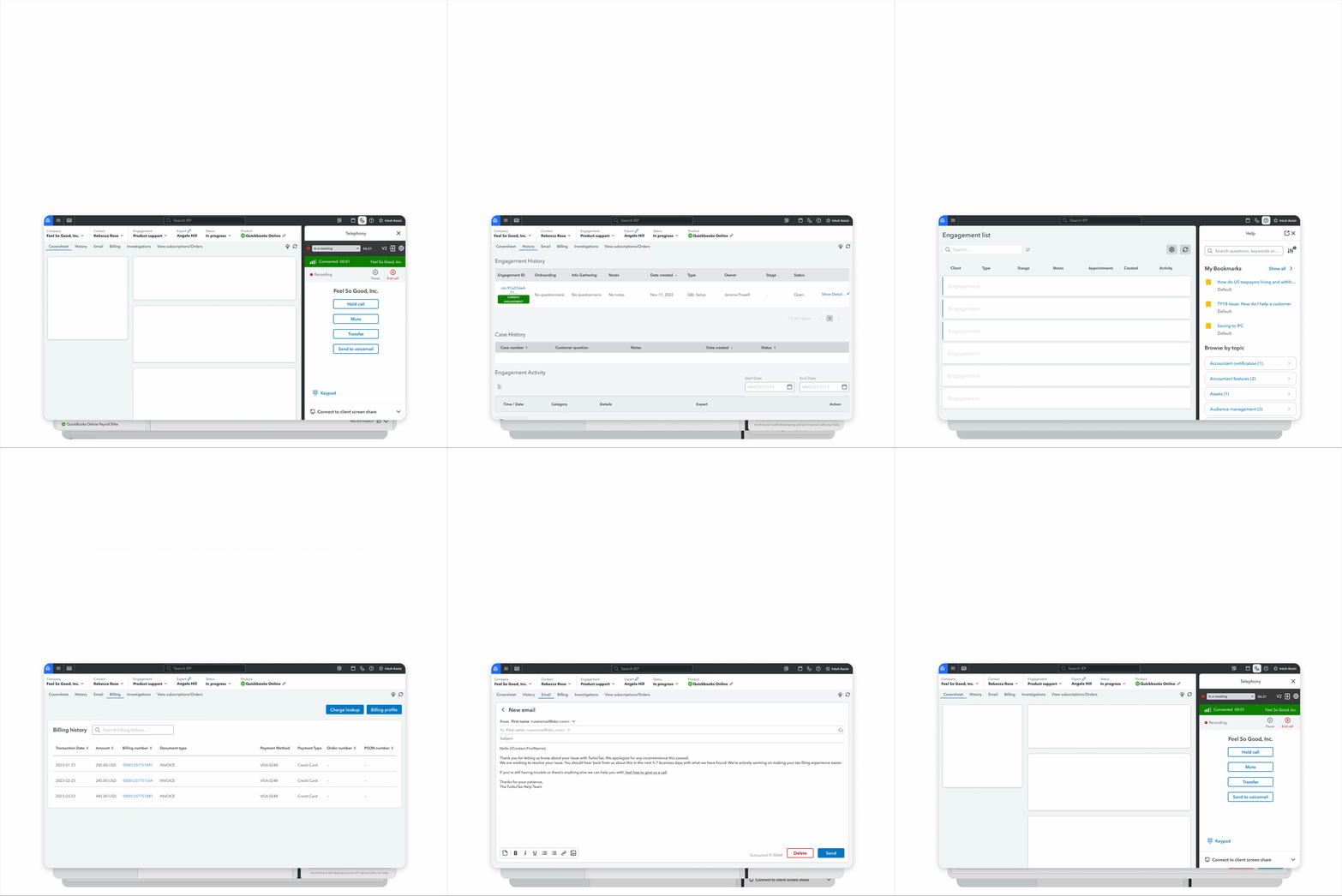
We successfully migrated and scaled 100% of TurboTax product support experts across our partners from Salesforce to IEP for the TY24 season. This transition was seamless, with Tier 1 product experts trained solely on IEP and no longer using Salesforce. Our experts performed exceptionally well, handling a total of 4 million contacts, a 42% increase from the previous year, while improving in Average Handle Time (AHT) and tNPS.
Why this is significant
The TurboTax product support experts managed 455K engagements over the last four days of the second peak alone, demonstrating the robustness of the new system. Key metrics include a 31% increase in the number of experts, a 95% contact handle rate, a 5% reduction in AHT to 17.5 minutes, and a tNPS score of 54.5, up 1.1 points from the previous year. The experts gave the new platform a Tools Readiness score of 82%, reflecting their confidence and satisfaction.
Season tooling metrics
The engagement pop-up success rate was an impressive 98%, and the IA Escalation Deflection Rate reached 18%. Between the third peak of TY23 and the end of the second peak for TY24, we rolled out over 15 features in IEP, including multi-tab support, daily updates, tier 2 escalation deflection, survey triggering, identity escalation and deactivation forms, T10 diagnostic fixes, and various fixes for layout issues and engagement activity tracking.
Expert feedback
Experts praised the system, noting its efficiency and reliability:
"It's a great and efficient system that I have come to use reliably."
"It's a lot easier and way more efficient."
"Overall, it is much improved."
"AI and the new website were an adjustment but very great changes for efficiency and ease of completing tasks."
What we have in store next
We all know that design is an ongoing process. Once a design is released, we monitor its performance and gather analytics. We then use these insights and metrics to continuously refine and iterate, uncovering new use cases and improving flows and patterns to enhance the user experience.
As we roll out these capabilities, we plan to leverage them across the platform, ensuring that other archetypes can also benefit from the same advantages.